


A common question when discussing temporary or backup power solutions is: What is the difference between a UPS and a generator?
Although both systems provide backup power during an electrical outage, they serve different purposes and operate in fundamentally different ways.
How UPS Systems Work
A UPS (Uninterruptible Power Supply) is designed to detect a power interruption immediately and switch to stored battery power within milliseconds or even faster. This seamless transition is essential in environments where even a brief interruption can cause data loss, equipment damage, or operational problems.
Modern UPS systems generally fall into two main categories:
Line-Interactive UPS
Line-interactive UPS systems continuously monitor the incoming power supply and switch to battery power when necessary.
They are generally more cost-effective and are suitable for less critical applications. They provide near-instantaneous protection without causing noticeable disruption to connected equipment.
Double-Conversion UPS
Double-conversion UPS systems continuously convert incoming AC power to DC and then back to AC.
This technology provides a clean and stable power output while filtering electrical noise, voltage fluctuations, and surges. These systems are commonly used to protect sensitive and mission-critical equipment.
UPS runtime depends directly on battery capacity. Standard systems can typically provide around 30 minutes of backup power, while larger systems with additional battery banks can support critical loads for several hours or longer.
However, batteries naturally degrade over time and generally require replacement every 3 to 5 years.
Large UPS installations also generate heat and therefore require appropriate cooling systems and regular maintenance. Battery testing, system inspections, and cleaning of filters and fans are among the typical maintenance requirements.
When selecting a UPS, it is important to consider not only the initial purchase price but also the total cost of ownership. Since UPS systems operate continuously, maintenance and component replacement can represent a significant part of their long-term operating costs.
How Generators Work
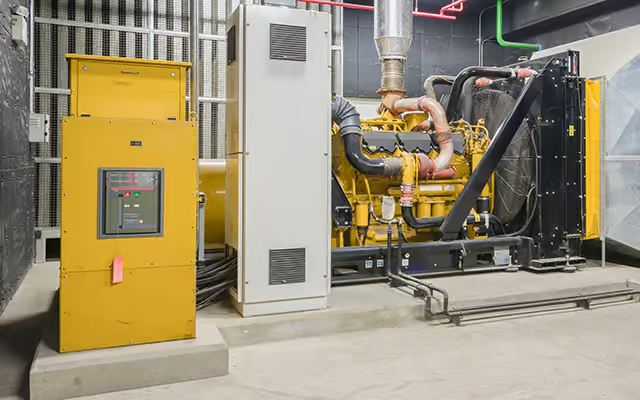
Generators can be considered the long-term solution for backup power. They generate electricity mechanically, most commonly using a diesel engine.
When the main power supply fails, an automatic transfer switch (ATS) detects the outage, starts the generator, and transfers the electrical load to the generator within a few seconds.
As long as sufficient fuel is available, generators can operate for extended periods and continue supplying power during prolonged outages.
However, generators typically require several seconds to start and stabilize. Therefore, a generator alone may not provide the uninterrupted power required by systems that cannot tolerate even a brief interruption.
Generators also require adequate installation space, ventilation, sound attenuation, and safe fuel storage. Noise, emissions, and refueling requirements should also be considered during system design.
Although generators generally require less frequent maintenance than UPS systems, scheduled servicing and periodic load testing are still essential to ensure reliable operation.
Which System Do You Need?
The most suitable backup power solution depends on your specific operational requirements.
UPS systems are particularly suitable for protecting sensitive equipment where even a short power interruption could result in data loss, equipment damage, or safety risks.
Generators, on the other hand, are better suited to maintaining the operation of an entire facility during extended power outages.
In many cases, the most reliable solution is to combine a UPS and a generator.
When the main power supply fails, the UPS immediately provides uninterrupted battery power while the generator starts in the background. Once the generator reaches a stable operating condition, the electrical load can be transferred to the generator, allowing the facility to continue operating.
When Is a UPS Alone Enough?
There are situations where using only a UPS may be appropriate.
For example, when installation space or fuel storage capacity is limited, a UPS can provide sufficient backup time to allow critical systems to shut down safely and prevent data loss or equipment damage.
The required UPS capacity and runtime should be determined according to the equipment load and the time needed for an orderly shutdown.
When Is a Generator Alone Enough?
In environments where a short interruption in power is acceptable, a generator-only solution may be sufficient.
For example, certain retail, hospitality, warehouse, or commercial applications may be able to tolerate the short delay required for a generator to start and stabilize.
The appropriate solution depends on the facility's electrical load, operational requirements, acceptable downtime, available space, and budget.
UPS vs Generator: Key Differences
The main difference between the two systems is their response time and operating duration.
A UPS provides almost immediate backup power but generally has a limited runtime determined by its battery capacity.
A generator takes several seconds to start but can continue supplying power for much longer periods as long as fuel is available.
For this reason, UPS and generator systems are often complementary rather than competing technologies.
A UPS provides immediate protection, while a generator provides long-term backup power.
Choosing the Right Backup Power Solution
An effective backup power strategy should balance instant protection, long-term endurance, reliability, and cost.
For many businesses and facilities, combining a UPS with a generator provides comprehensive protection. The UPS handles the immediate transition when mains power fails, while the generator takes over once it has started and stabilized.
In other situations, a properly specified standalone UPS or generator may be sufficient.
Understanding the differences between these technologies is the first step toward selecting a reliable backup power solution that matches your operational needs.
How Absharon Makina Can Help
Absharon Makina LLC specializes in generator sales, rental services, spare parts, and technical maintenance solutions.
Our professional team can help assess your power requirements and identify a suitable backup power solution based on your facility, equipment, operating conditions, and continuity requirements.
Whether you need a temporary power solution, a complete standby generator system, or an integrated UPS and generator setup, choosing the right system can help ensure that your business remains operational during power outages.
 Fill in the required fields and you will be contacted soon