


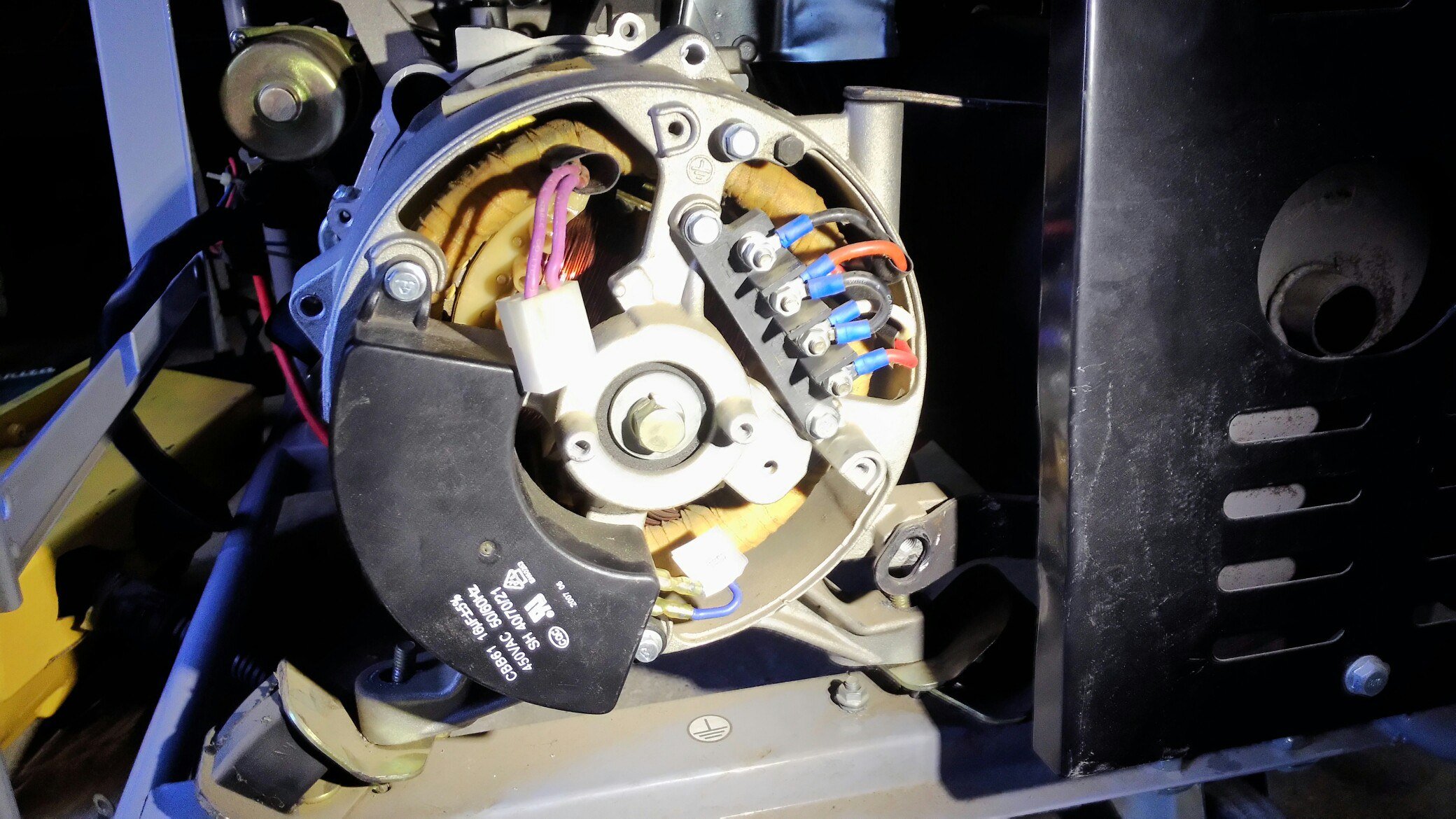
Generators are widely used in homes, offices, schools, and other facilities. They serve as reliable backup power sources when the main electrical supply is interrupted. However, problems that occur during generator operation, especially low output voltage, can create serious issues for both connected equipment and users.
Operating a generator with low voltage can cause electrical equipment to overheat. The main reason is that equipment draws higher current to obtain the required power. As the current increases, heat generation also increases, which may result in equipment damage.
Why does generator output voltage decrease, and how can this problem be solved? The main causes and their solutions are presented below.
What Is Generator Output Voltage?
Output voltage is the electrical potential difference generated at the output terminals of a generator. This value directly affects the performance of the generator and the safe operation of connected equipment.
Stable voltage within the required range ensures the proper operation of electrical devices and protects them from damage caused by excessively high or low voltage.
Normal Output Voltage in Different Types of Generators
Depending on the type of generator, output voltage may vary.
• Portable generators – usually produce voltage within the range of 120–240 V.
• Standby generators – provide 120–240 V for single-phase systems and 120/208 V – 277/480 V for three-phase systems.
• Industrial generators – depending on the application area, may operate at 230 V, 460 V, 480 V, and higher voltage levels.
Ensuring that the voltage produced by the generator complies with the required standards is essential for safe and efficient operation.
Why Is Generator Output Voltage Low?
1. Generator Overloading
One of the most common causes of reduced generator output voltage is exceeding the generator’s capacity.
In this situation, the generator engine cannot provide the required power. As a result, the voltage decreases, and in some cases, the generator may stop completely. This condition can also damage equipment connected to the generator.
Solution:
In most cases, this is not a technical failure.
• Make sure that the generator load does not exceed its rated capacity.
• Use power measuring devices to monitor the load.
• Connect electrical equipment according to the generator’s power capacity.
2. Automatic Circuit Breaker Failure
The automatic circuit breaker installed in generators is designed to protect the electrical system. It automatically shuts down the generator during excessive voltage, overload, or system faults.
If the circuit breaker is faulty or does not operate correctly, the output voltage may decrease.
Solution:
• Check the condition of the automatic circuit breaker.
• Measure wire resistance using a multimeter.
• Inspect the condition of the electrical panel.
• Replace the faulty circuit breaker if a problem is detected.
3. Mechanical Failures
Problems in the generator turbine, fuel system, or oil filter can prevent the engine from operating normally.
A dirty oil filter or a fault in the fuel system may prevent sufficient fuel from reaching the engine, resulting in reduced output voltage.
Solution:
• Check the oil and fuel filters.
• Have the turbocharger condition inspected by a specialist.
• Perform generator maintenance on time.
4. Capacitor Failure
The generator capacitor plays an important role in voltage formation and regulation.
When the capacitor fails, the generator may begin producing low voltage.
Solution:
• Disconnect the capacitor from the generator.
• Measure its capacitance using a multimeter.
• If the measured value differs from the manufacturer’s specified value by more than ±5 μF, the capacitor should be replaced.
5. Alternator Failure
The alternator is one of the main components of a generator and is responsible for producing output voltage.
When a generator remains unused for a long period, the residual magnetic field in the alternator may weaken. As a result, the generator may not be able to produce the required voltage.
Solution:
A short-term external direct current (DC) is applied to the alternator’s excitation winding.
Electrical specialists refer to this process as “excitation winding magnetization.”
6. Stator Problems
The rotor rotates inside the stator and generates electrical energy.
If there is a break or short circuit in the stator windings, the generator’s output voltage decreases.
Solution:
• Visually inspect the stator windings.
• Measure resistance using a multimeter.
• The measured values must comply with the manufacturer’s technical specifications.
7. AVR (Automatic Voltage Regulator) Failure
The AVR is the main electronic component responsible for maintaining stable generator output voltage.
When the AVR fails, the output voltage may become low or unstable even if the generator is operating normally.
Solution:
• Check the main circuit breaker.
• Inspect electrical wires and connections.
• Verify that the AVR is properly calibrated.
• Check the condition of rotor brushes.
• If other components are functioning correctly, the AVR should be replaced.
8. Faults in Wiring and Electrical Connections
Loose contacts, oxidized terminals, and damaged wires create resistance during electrical current transmission.
This resistance causes a decrease in the generator’s output voltage.
Solution:
• Regularly inspect all electrical connections.
• Clean corroded terminals.
• Replace damaged wires with new ones.
• Ensure that wiring is connected according to the manufacturer’s diagram.
Low generator output voltage can occur due to various reasons. The most common causes include overloading, automatic circuit breaker failure, alternator and stator problems, AVR failure, capacitor malfunction, mechanical issues, and poor electrical connections.
Regular generator maintenance, inspection of filters and wiring, and timely replacement of faulty components help maintain stable output voltage, ensure safe equipment operation, and extend the generator’s service life.
 Fill in the required fields and you will be contacted soon