


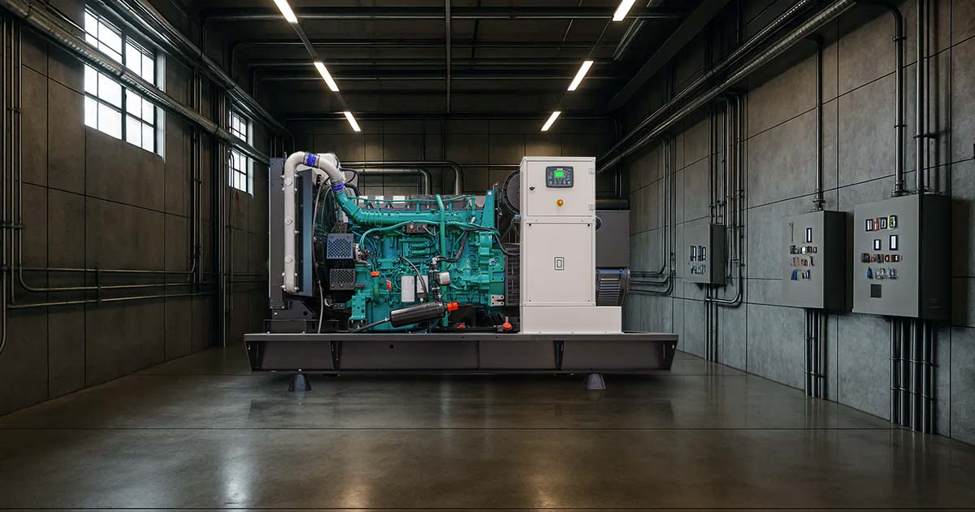
Importance of Proper Generator Set Loading
The primary function of a generator set is to operate under load. Although this may seem obvious, proper generator loading is essential for ensuring uninterrupted operation, maintaining engine health, and extending the equipment’s service life.
The optimal operating load of a generator set depends on its application and power rating. In general:
- Standby and prime-rated diesel generators are designed to operate at 50–85% of their rated capacity.
- Continuous-rated diesel generators achieve optimal performance when operating at 70–100% load.
The manufacturer's recommended service intervals and projected component lifespan are based on operation within these load ranges. Therefore, during the design phase, it is important to select a generator that matches the facility’s power requirements and operates within the recommended load range.
Operating a generator at a low load for extended periods can negatively affect engine performance, productivity, and overall service life. It also increases the risk of unexpected failures and unplanned downtime.
Effects of Underloading
Running a diesel generator at less than 30% of its rated capacity for prolonged periods can lead to several issues. One of the most common is wet stacking.
Wet stacking occurs when black, oily residue leaks from the exhaust manifold joints. This happens because low-load or no-load operation reduces cylinder temperature, preventing complete fuel combustion. As a result, unburned fuel and oil accumulate in the exhaust system.
Visible exhaust residue does not always indicate engine failure. However, it may signal underloading, low ambient temperature, or insufficient engine coolant temperature.
Long-Term Consequences
Although wet stacking may not immediately damage the engine, prolonged underloading can result in:
- Carbon deposits forming behind the piston rings;
- Carbon buildup inside the cylinders;
- In severe cases, cylinder liner polishing.
These conditions reduce engine power, decrease performance, and accelerate component wear. Consequently, maintenance costs increase, and the likelihood of unplanned downtime and equipment failure becomes significantly higher.
Conclusion
To ensure reliable and long-lasting operation, diesel generator sets should always be operated within the load range recommended by the manufacturer. Properly sized and correctly loaded generators deliver higher efficiency while minimizing technical issues, maintenance costs, and unexpected failures.
 Fill in the required fields and you will be contacted soon