


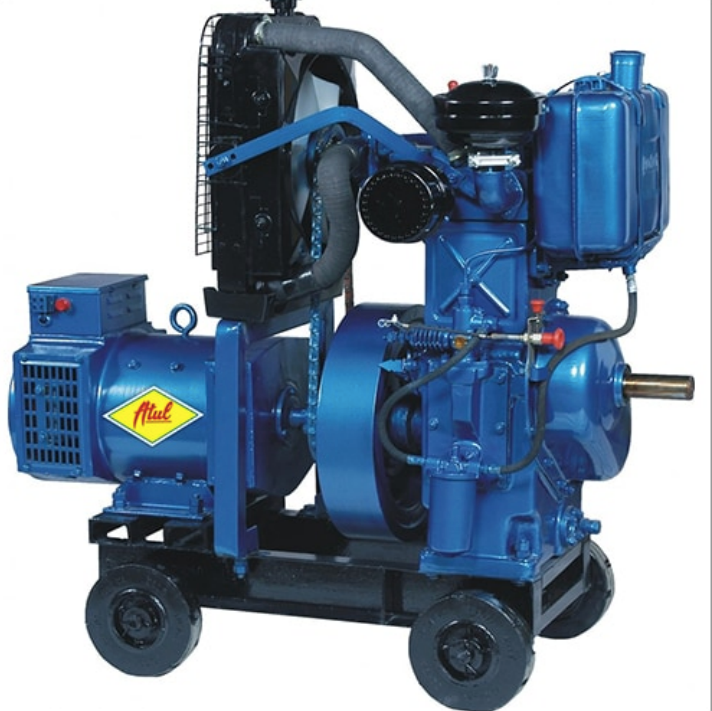
Ensuring an uninterrupted power supply is critical for industrial facilities, construction sites, hospitals, data centers, and other essential operations. When the electrical grid fails or cannot meet existing power demands, diesel generators are used as a reliable backup or primary power source.
How a Diesel Generator Works
The primary function of a diesel generator is to convert the mechanical energy produced by burning diesel fuel into electrical energy. This process consists of two main stages.
Stage I – The Diesel Engine Generates Mechanical Energy
A diesel generator engine operates on the same principle as an internal combustion engine used in vehicles. The process consists of four main stages:
1. Air Intake
The intake valve opens, allowing clean air to enter the cylinder.
2. Compression
The piston moves upward, compressing the air inside the cylinder. As a result, the air temperature rises significantly.
3. Combustion and Expansion
Under high temperature and pressure, diesel fuel is injected into the cylinder. The fuel ignites automatically, creating an explosion that forces the piston downward.
4. Exhaust
The piston moves upward again, expelling the combustion gases from the cylinder.
This cycle repeats continuously. The piston's movement rotates the crankshaft, generating the mechanical energy required to drive the alternator.
Stage II – Converting Mechanical Energy into Electrical Energy
The mechanical energy produced by the engine is transferred to the alternator.
The alternator operates based on the principle of electromagnetic induction. The engine rotates the rotor inside the alternator, and the magnetic field generated by the rotor passes through the stator windings, producing an electric current.
The control system then regulates the output voltage and frequency, ensuring a stable and reliable power supply for connected equipment.
Diesel Generator Efficiency
One of the most important factors to consider when selecting a generator is its efficiency.
Diesel generators can convert approximately 30–40% of the chemical energy contained in fuel into electrical energy. This makes them more efficient than gasoline generators.
However, operating a generator for extended periods under:
- Very low loads
- Excessively high loads
may lead to:
- Incomplete fuel combustion
- Increased fuel consumption
- Reduced efficiency
- Faster wear of engine components
The best performance is achieved when the generator operates within its recommended load range.
How Is Diesel Generator Fuel Consumption Calculated?
Several factors affect a generator's fuel consumption, including:
- Generator power rating (kW)
- Load percentage
- Engine technology
- Operating conditions
- Specific fuel consumption
Estimated Fuel Consumption Formula
Fuel Consumption (liters/hour) = Power (kW) × Load Percentage × Specific Fuel Consumption (g/kWh) ÷ 1000 ÷ 0.84
Main Advantages of Diesel Generators
Diesel generators remain one of the most reliable power solutions across many industries.
High Reliability
Diesel generators can restore power within seconds of a utility power outage.
Lower Fuel Consumption
Due to the high energy density of diesel fuel, more electrical power can be generated from the same volume of fuel.
Long Service Life
Diesel engines operate at lower RPMs, resulting in less wear and a longer operational lifespan.
Easy Maintenance
Compared to many other power systems, diesel generators are relatively simple to maintain and repair.
Improved Safety
Diesel fuel has a higher flash point than gasoline, making storage and transportation safer.
Applications of Diesel Generators
Construction Sites and Outdoor Locations
Diesel generators are widely used as a primary power source in locations where grid electricity is unavailable or insufficient.
Common applications include:
- Construction projects
- Outdoor events
- Concerts
- Exhibitions
- Temporary work sites
Backup Power Supply
In many residential, commercial, and industrial facilities, diesel generators automatically start during power outages to keep critical systems operational.
They are particularly important in:
- Hospitals
- Data Centers
- Telecommunications Stations
- Banks
- Manufacturing Facilities
- Business Centers
A properly selected and regularly maintained diesel generator can provide reliable power for many years, ensuring uninterrupted operation of equipment and business-critical processes.
 Fill in the required fields and you will be contacted soon