


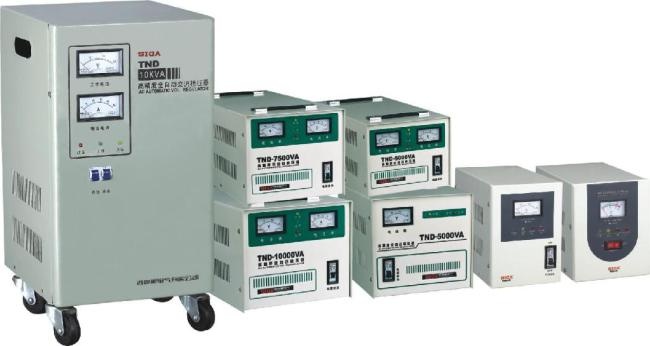
In today's world, electrical appliances and industrial equipment play an essential role in everyday life and business operations. Maintaining a stable and reliable power supply is therefore extremely important. Voltage fluctuations can damage sensitive electrical equipment, lead to expensive repairs, and cause operational downtime. Voltage stabilizers are valuable for both residential and industrial applications.
Voltage stabilizers regulate variations in the electrical supply, helping equipment operate more safely and reliably. They can protect household appliances and industrial machinery, extend equipment service life, and reduce the risk of unexpected malfunctions.
What Is a Voltage Stabilizer?
A voltage stabilizer is an electrical device designed to regulate changes in input voltage and maintain the output voltage within a specified range. It helps protect connected equipment from the harmful effects of overvoltage and undervoltage.
The primary purpose of a stabilizer is to compensate for fluctuations in the power supply and provide connected devices with a more consistent voltage. However, its protection capabilities depend on the model and its technical specifications. A voltage stabilizer should not be considered a universal solution for every type of electrical problem.
Why Do You Need a Voltage Stabilizer?
1. Protection Against Voltage Fluctuations
Sudden voltage increases, load changes, and voltage drops can negatively affect electrical appliances. These fluctuations may damage electronic components, cause motors to operate irregularly, or lead to equipment failure.
A voltage stabilizer helps reduce these risks by regulating the input voltage. This is particularly important in areas where fluctuations in the power supply occur frequently.
2. Extended Service Life of Electrical Equipment
Equipment such as refrigerators, air conditioners, computers, and industrial machines may experience additional stress when operating under unstable voltage conditions for extended periods. This can accelerate component wear and increase the likelihood of malfunctions.
A properly selected voltage stabilizer helps regulate the power supply, potentially extending equipment service life and reducing repair costs.
3. Improved Efficiency and Performance
Voltage fluctuations can affect the operation of electric motors, compressors, and other electrical components. When the supply voltage falls outside the level required by the equipment, it may operate irregularly, lose performance, or generate excess heat.
A correctly selected stabilizer helps equipment operate under more suitable voltage conditions. However, a stabilizer does not automatically reduce energy consumption. Its main benefits are voltage regulation and equipment protection.
4. Reduced Risk of Data Loss and System Failures
A stable power supply is especially important for businesses that rely on computers, servers, and automated control systems. Voltage problems can cause system interruptions, data loss, and production downtime.
A voltage stabilizer helps reduce the impact of supply voltage variations. However, when uninterrupted power is required, a UPS or a suitable backup power system should also be considered.
The Role of Phase Sequence Correctors in Voltage Stabilization
In three-phase electrical systems, the correct phase sequence is essential. An incorrect phase sequence can cause certain electric motors to rotate in the opposite direction, preventing equipment from operating as intended. This may disrupt production processes and increase the risk of mechanical damage.
An automatic phase sequence corrector monitors the phase sequence and helps initiate appropriate protective measures when an incorrect connection is detected. When used alongside a voltage stabilizer, it can improve the reliability of power management for three-phase equipment.
It is important to understand that a phase sequence corrector and a voltage stabilizer perform different functions. The appropriate solution should be selected according to the characteristics of the electrical system and the equipment's protection requirements.
How to Choose the Right Voltage Stabilizer
When selecting a voltage stabilizer, consider the following factors:
Load capacity: The stabilizer's rated capacity should match the total power requirements of the connected equipment. Additional capacity may be necessary for motors and compressors that draw high starting currents.
Stabilizer type: Depending on operating conditions and the required accuracy, you can choose a relay-type, servo-controlled, or static voltage stabilizer.
Number of phases: Single-phase stabilizers are suitable for many household applications, while compatible industrial equipment may require a three-phase model.
Input voltage range: Ensure that the stabilizer can compensate for the minimum and maximum voltage variations recorded at the installation site.
Protection features: Check whether the device provides protection against overload, overheating, and other relevant electrical risks.
Quality and technical support: Review the equipment's technical specifications, compliance documentation, warranty terms, and service availability.
For industrial applications, selection should also account for the characteristics of the three-phase electrical system, equipment starting currents, and the need for phase sequence monitoring.
Conclusion
Voltage stabilizers play an important role in protecting household appliances and industrial equipment from variations in the electrical supply. They help maintain a suitable voltage level, support reliable equipment operation, and reduce the risk of certain electrical faults.
To choose the right stabilizer, it is important to consider equipment power requirements, the number of phases, the input voltage range, and the required level of protection. A properly selected and correctly installed voltage stabilizer can contribute to safer and more reliable operation in both homes and industrial facilities.
 Fill in the required fields and you will be contacted soon