


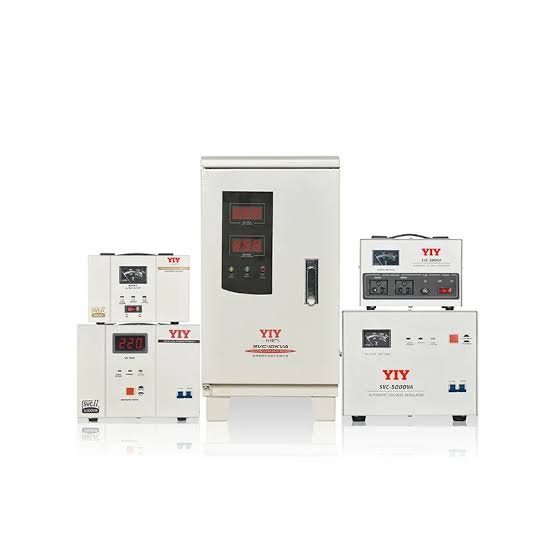
A single-phase voltage stabilizer regulates 230V power supplies and is commonly used in homes and small businesses. A three-phase automatic voltage regulator stabilizes 400V or higher industrial power systems and balances the load across all three phases.
Three-phase systems provide higher efficiency, greater power capacity, and more stable operation for heavy-duty equipment. Single-phase units are simpler and more cost-effective for applications with lower power requirements.
Voltage regulation is essential for maintaining a stable power supply across various electrical applications. A three-phase voltage regulator and a single-phase voltage stabilizer differ significantly in terms of design, operation, capacity, and intended applications.
This article explains the key differences between these systems, their main parameters, applications, and advantages to help you determine which option is more suitable for your business.
What Is the Difference Between a Single-Phase and a Three-Phase Voltage Regulator?
Single-Phase Voltage Stabilizer
A single-phase voltage stabilizer is designed to regulate voltage in electrical systems powered by 230V single-phase supplies.
It helps maintain a stable output voltage and is mainly used in residential properties and small commercial facilities.
Key features include:
Simple Design: Compact and easier to install.
Limited Capacity: Suitable for lower-power applications such as household appliances and small office equipment.
Cost Efficiency: Single-phase automatic voltage stabilizers are generally more affordable than three-phase solutions.
Three-Phase Automatic Voltage Regulator
A three-phase automatic voltage regulator (AVR) stabilizes voltage in three-phase electrical systems consisting of three alternating currents separated by 120°.
These regulators are particularly important for industrial applications where heavy equipment is used. They ensure stable and balanced voltage distribution across all three phases.
Key features include:
High Capacity: Suitable for industrial equipment and systems with high power requirements.
Voltage Balancing: Maintains stability between phases, helping reduce electrical stress and equipment wear.
Advanced Design: Larger and more sophisticated units designed for demanding operating environments.
What Is the Difference Between Single-Phase and Three-Phase Power Supply?
Single-phase and three-phase voltage regulators can provide different outputs depending on various electrical parameters.
The main differences include:
Voltage: Single-phase systems typically use 230V, while three-phase systems may operate at 400V or higher.
Power Delivery: Three-phase systems provide more stable and efficient power delivery, making them suitable for heavy-duty equipment.
Applications: Single-phase systems are generally used for lighting, fans, small motors, and other low-power loads, while three-phase systems are designed for industrial equipment and large motors.
Three-Phase vs. Single-Phase Voltage: Key Comparisons
Several important factors should be considered when comparing single-phase and three-phase systems.
Efficiency and Power Distribution
Three-phase systems provide greater efficiency when transmitting electricity over long distances and can reduce energy losses.
For this reason, three-phase automatic voltage regulators are particularly suitable for factories, manufacturing facilities, and industrial plants.
Single-phase voltage stabilizers, on the other hand, are ideal for localized and lower-power applications. They provide a simple and cost-effective solution for homes and small businesses.
Load Balancing
A three-phase regulator balances voltage across all three phases. This helps reduce the electrical load on equipment and can extend its service life.
Single-phase systems do not have phase imbalance issues because they operate using only one phase.
Flexibility
Single-phase systems are simple and versatile, making them suitable for lightweight applications.
However, in environments with high power requirements, the advantages of three-phase systems become more apparent. They allow equipment to operate more reliably and efficiently under demanding conditions.
What Are the Applications of Single-Phase and Three-Phase Electrical Circuits?
1. Single-Phase Electrical Circuit Applications
Residential properties
Small commercial facilities
Refrigerators
Air conditioners
Lighting systems
Other household and low-power electrical equipment
2. Three-Phase Electrical Circuit Applications
Industrial equipment
Large manufacturing facilities
High-power motors
Pumps
HVAC systems
Heavy industrial machinery
Advantages of Three-Phase vs. Single-Phase Motors
Three-phase motors offer several advantages over single-phase motors, particularly in applications that require high power, efficiency, and reliability.
1. Higher Efficiency
Three-phase motors generally operate more efficiently than single-phase motors because of their smoother power delivery.
This efficiency can help reduce energy consumption and long-term operating costs.
2. Greater Power Output
Three-phase motors can handle larger loads and produce more power than single-phase motors of a similar size.
This makes them particularly suitable for industrial equipment and applications that require high torque.
3. Smoother Operation
Consistent Torque: Three-phase motors provide continuous and uniform torque, reducing the pulsations that can occur in single-phase motors.
Reduced Vibration: A stable power supply reduces mechanical stress, resulting in quieter and smoother operation.
4. Reliability and Durability
Three-phase motors generally have a robust design and can operate reliably in demanding environments.
Balanced power distribution helps reduce wear and tear, extend motor service life, and minimize maintenance requirements.
5. Compact Design
For the same power output, three-phase motors are generally smaller and lighter than comparable single-phase motors.
This makes them advantageous for industrial systems where available space is limited.
6. Cost-Effectiveness in Large-Scale Applications
Although the initial cost of a three-phase motor may be higher, lower energy consumption, reduced maintenance requirements, and a longer service life can make it more cost-effective over the long term.
This is particularly important for industrial and commercial facilities.
7. Versatility
Three-phase motors can operate with a wide range of industrial equipment, including pumps, compressors, conveyors, and large HVAC systems.
This makes three-phase motors a flexible solution for demanding industrial applications.
 Fill in the required fields and you will be contacted soon