


What Is a Generator and What Is It Used For?
Fuel Consumption and Operating Costs
Lifespan and Durability
Specific Applications
Applications of Diesel and Petrol Generators
Conclusion: Which Generator Is Right for You?
Generators are a reliable and effective solution for ensuring uninterrupted power supply during critical situations in both industrial and residential environments. They are also used as continuous energy sources in areas where access to the electrical grid is limited or completely unavailable.
In addition, generators are widely used in locations where electricity is required only for a specific period of time, such as construction sites, quarries, and temporary work areas.
Among the most commonly used types of generators, diesel and petrol generators have a special place. Each type has its own unique characteristics and is suitable for different applications. In this article, we will explore the main differences between diesel and petrol generators.
What Is a Generator and What Is It Used For?
A generator is a device designed to produce electrical energy by converting mechanical energy into electrical energy.
This process is carried out through an internal combustion engine that operates using fuels such as diesel or petrol.
The engine transfers the mechanical energy produced by fuel combustion to the generator — the alternator. The alternator then converts this mechanical energy into electrical energy.
Generators can be used for different purposes. They can operate as backup power sources, automatically starting when the electricity supply is interrupted and stopping once the main power grid is restored.
In addition, generators can be used as primary power sources in remote areas without access to the electrical grid or as temporary energy solutions for professionals working in locations without electrical connections.
Characteristics of Diesel Generators
Efficiency and Fuel Consumption
Diesel fuel provides higher fuel efficiency compared to petrol. Therefore, diesel generators usually have lower operating costs in the medium and long term.
However, one of the most important factors when selecting a generator is the required power capacity, as energy demand directly affects fuel consumption.
Durability and Maintenance
Diesel engines are designed to operate under heavy and variable loads for extended periods.
For this reason, diesel generators are considered the most suitable option for industrial applications that require medium to high power output.
Although diesel generators require regular maintenance, their maintenance intervals are generally longer compared with petrol generators.
They also have a significantly longer service life.
Characteristics of Petrol Generators
Cost and Availability
Within the same power range, petrol generators are usually more affordable than diesel generators.
They are particularly suitable for small-scale tasks, temporary applications, and projects requiring electricity occasionally.
Starting and Maintenance
Due to the high volatility of petrol, petrol generators usually start faster and provide a more responsive power supply.
However, because of fuel characteristics and engine component wear, petrol generators may require more frequent maintenance.
Key Differences Between Diesel and Petrol Generators
Fuel Consumption and Operating Costs
In the long term, diesel generators are considered more economical due to their lower fuel consumption.
However, petrol generators have a lower initial purchase cost and are a practical choice for projects with lower energy requirements.
Lifespan and Durability
Diesel generators have a significantly longer operational lifespan.
Models operating at 1500 rpm are particularly suitable for industrial applications and long-term projects.
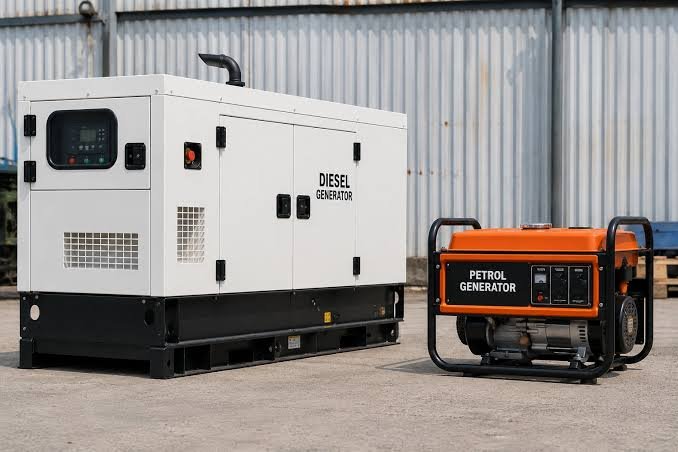
Petrol generators typically operate at 3000 rpm. They have a lighter design and are easier to transport, making them more suitable for temporary and short-term applications.
Specific Applications
Diesel generators are ideal for locations requiring medium to high power capacity, continuous operation, or reliable backup electricity.
Petrol generators are better suited for small construction projects, low-energy applications, and portable power solutions.
Applications of Diesel and Petrol Generators
Applications of Diesel Generators
Diesel generators are widely used in the following areas:
Industrial facilities:
Used in factories, production plants, and industrial sites where stable and reliable power supply is required.
Data centres:
Used as backup power sources where reliability and energy efficiency are critical.
Construction and mining projects:
Provide continuous energy supply in demanding environments requiring medium to high power output.
In such industries, generator rental is often considered a more practical and cost-effective solution, especially when equipment is needed for a limited period.
Applications of Petrol Generators
Petrol generators are commonly used for:
Small construction projects:
Providing power for electrical tools and professional equipment.
Residential use:
Serving as temporary backup power sources during electricity outages.
Solar energy system support:
Helping maintain system stability during grid failures.
Outdoor events:
Lightweight and compact generators, especially inverter models, are suitable for outdoor activities and events.
Short-term projects:
Ideal for applications with low energy demand and temporary electricity requirements.
Conclusion: Which Generator Is Right for You?
When choosing between a diesel and petrol generator, it is important to consider the specific requirements of the project and operating conditions.
One of the most important factors influencing the decision is the required power capacity.
Diesel generators are the better choice for long-term operation, heavy loads, and applications requiring high power output.
Petrol generators are more suitable for short-term projects, portable applications, and locations with lower energy requirements.
Selecting the right generator depends not only on the initial purchase price but also on fuel consumption, maintenance requirements, lifespan, power needs, and intended use.
A properly selected generator can improve energy reliability and help optimize long-term operating costs.
 Fill in the required fields and you will be contacted soon