


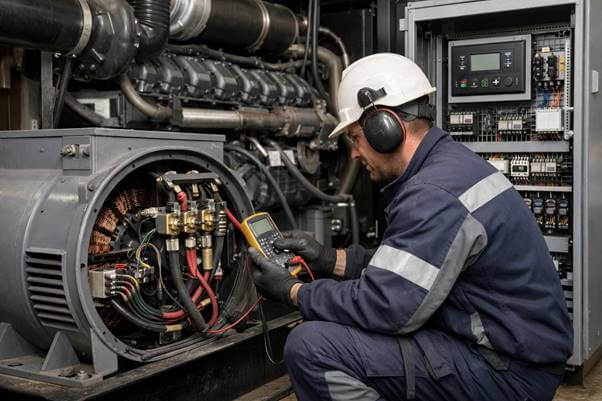
A diesel generator is a power-generating system that combines a diesel engine with an electrical generator, typically an alternator. Diesel generators are widely used because of their reliability, durability and ability to operate under heavy loads for extended periods.
Their relatively low fuel consumption also makes them an economical solution for backup and primary power generation.
However, regular maintenance is essential to ensure reliable performance throughout the generator’s service life. This is particularly important for hospitals, data centres, government facilities, airports, water treatment plants and other critical facilities where power interruptions can have serious consequences.
The best approach is to follow the maintenance schedule recommended by the generator manufacturer.
1. Routine General Inspection
The engine, fuel system, exhaust system and DC electrical system should be inspected regularly while the diesel generator is operating.
Particular attention should be paid to possible oil, fuel and coolant leaks.
The alternator, control panel, AVR, sensors, wiring, cables and electrical connections should also be checked regularly.
Engine oil should be changed at the intervals specified by the manufacturer. For some generators, the interval may be around 500 operating hours, but the exact schedule should always be based on the manufacturer’s recommendations.
2. Lubrication Service
Engine oil plays an essential role in protecting internal engine components and ensuring smooth operation.
The oil level should be checked while the generator is switched off and the engine has cooled sufficiently. If necessary, add the correct type and viscosity of oil recommended by the manufacturer.
Engine oil and oil filters should be replaced at the specified maintenance intervals.
Used oil and filters must be disposed of properly in accordance with environmental regulations.
3. Cooling System Inspection
Regular inspection of the cooling system is essential to prevent engine overheating.
Once the engine has cooled down, check the coolant level and add coolant if necessary, following the manufacturer’s specifications.
The outside of the radiator should also be kept clean. Dust, leaves and other debris can restrict airflow and cause the engine to overheat.
A soft brush, cloth, low-pressure compressed air or an appropriate water stream can be used to clean the radiator.
4. Fuel System Maintenance
Diesel fuel can deteriorate during long-term storage, resulting in contamination and deposits in the fuel system. For this reason, generators should not be left unused for extended periods without appropriate maintenance.
The fuel tank, filters, fuel lines and connections should be inspected regularly.
Particular attention should be paid to the presence of water in the fuel system, as condensation inside the tank can lead to moisture accumulation.
Fuel hoses and connections should also be checked for cracks, leaks and other damage.
Poor-quality or improperly stored fuel can negatively affect the fuel injection system. Using suitable fuel and carrying out regular maintenance are therefore essential for reliable generator operation.
5. Battery Testing
One of the common causes of standby generator failure is a weak or insufficiently charged starting battery.
Batteries should be inspected regularly, terminals should be kept clean and any signs of corrosion should be removed.
Measuring voltage alone may not provide a complete picture of battery condition. Where necessary, a proper battery load test should be performed.
If corrosion develops around the terminals, they should be cleaned and the connections securely reinstalled.
6. Routine Generator Exercise
A standby generator should not be operated only when a power outage occurs. It should also be started periodically for testing purposes.
Regular operation helps keep engine components lubricated, prevents oxidation of electrical contacts and improves starting reliability during an emergency.
For standby generators, a test run under load is generally recommended at least once a month. The exact duration and load level should follow the manufacturer’s instructions.
7. Keep the Generator Clean
Keeping the generator clean makes it easier to identify potential problems at an early stage. Oil, fuel and other fluid leaks are much easier to detect on a clean engine.
Hoses, belts, cables and other components should be visually inspected on a regular basis.
The area around the generator should also be kept free from dust, dirt, insects and other foreign objects.
The more frequently a generator is used, the more attention it generally requires in terms of maintenance.
Additional Maintenance Measures
Air Filter Cleaning
The air filter should be inspected regularly and cleaned or replaced according to the manufacturer’s recommendations.
A dirty air filter restricts airflow to the engine, which can increase fuel consumption and reduce engine performance.
Engine Breather Cleaning
Engine breathers should also be inspected during routine maintenance. A blocked or contaminated breather can increase pressure inside the engine and contribute to oil leaks.
Cleaning and servicing should be carried out according to the maintenance intervals and procedures specified by the manufacturer.
Conclusion
The reliability and service life of a diesel generator depend not only on the quality of the equipment but also on proper and timely maintenance.
Regular oil and filter changes, cooling and fuel system inspections, battery maintenance and routine generator testing can reduce the risk of failures and extend the operating life of the equipment.
Professional generator servicing also helps ensure that the unit is ready to provide reliable power whenever it is needed.
 Fill in the required fields and you will be contacted soon