


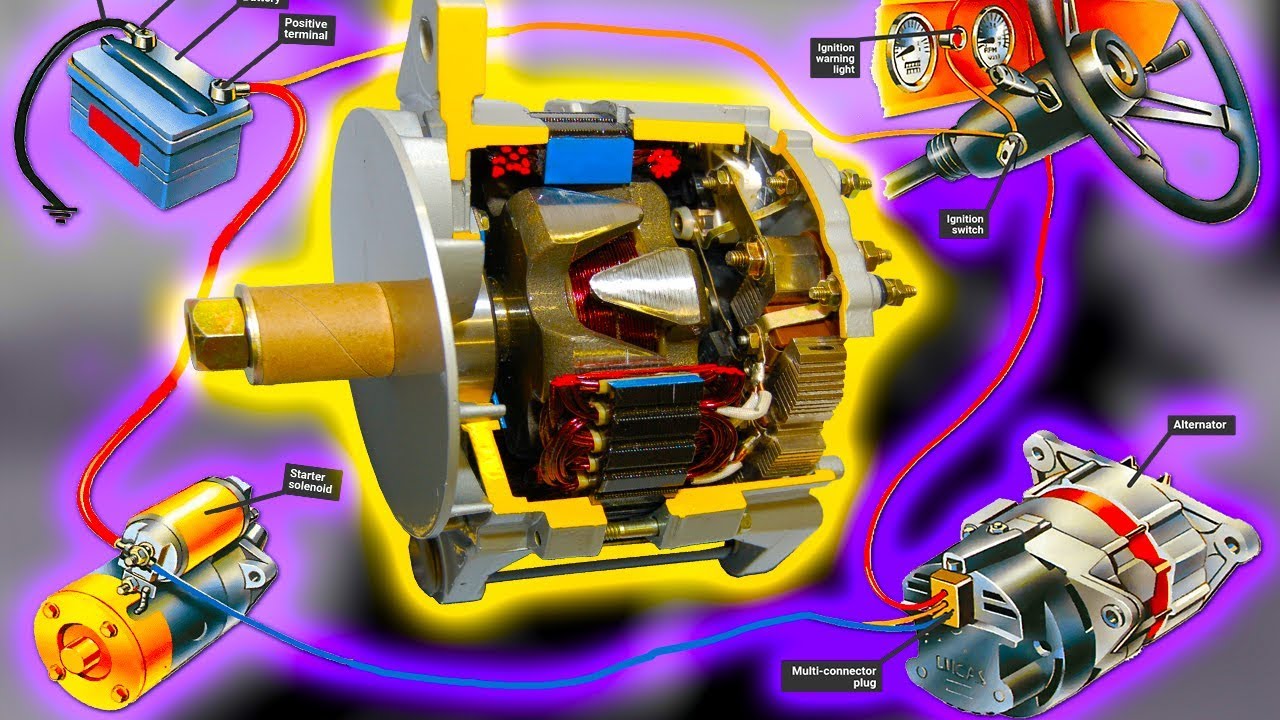
The automotive alternator is one of the most important components of a vehicle’s electrical system. It converts mechanical energy from the engine into electrical energy and supplies power to vehicle electrical consumers while charging the battery.
Explaining how an alternator works can be technically complex. This guide is designed for trainers, students, and automotive specialists who want to understand alternator construction, operating stages, and electrical processes more clearly.
To understand alternator operation, it is important to first learn its main components and their functions.
Main alternator components:
Pulley: Transfers mechanical energy from the engine to the alternator.
Rotor: Creates a rotating magnetic field required for electrical generation.
Stator: The stationary part of the alternator where electrical voltage is generated.
Rectifier: Converts alternating current (AC) into direct current (DC).
Voltage Regulator: Controls output voltage and maintains electrical system stability.
Fan: Helps cool the alternator and maintain proper operating temperature.
Main electrical connections:
D−: Ground connection.
B+: Battery charging output connection.
D+: Control connection used for rotor excitation and voltage regulation.
The alternator operation can be divided into four main stages:
- pre-excitation;
- voltage generation through electromagnetic induction;
- current rectification;
- voltage regulation.
During pre-excitation, initial current is supplied to the rotor to create a magnetic field. This process is usually controlled through the ignition switch and activates the battery warning lamp on the dashboard.
Once the alternator starts operating, generated voltage is supplied to the D+ terminal, and the charging warning lamp turns off.
When the rotor rotates, its magnetic field interacts with the stator windings, creating three-phase alternating voltage through electromagnetic induction.
The AC voltage produced by the stator is converted into DC voltage through the rectifier unit and diode bridge. This allows the vehicle battery and electrical systems to receive stable power.
The voltage regulator monitors the alternator output and keeps the voltage within the required range, protecting electrical components from overvoltage or insufficient charging.
Modern vehicles use intelligent voltage regulators that communicate with electronic control units. These systems analyze engine operation, battery condition, and energy consumption to optimize alternator performance.
If the battery charge level is low, the system increases alternator output. When the battery is fully charged, alternator load is reduced, improving fuel efficiency and reducing unnecessary engine load.
The alternator can communicate with the vehicle network and engine control system through a data bus connection.
The alternator electrical system includes:
- pre-excitation;
- magnetic field generation;
- voltage generation;
- rectification;
- voltage control.
Understanding alternator operation is a fundamental part of automotive electrical system education. Technical diagrams, animations, simulations, and practical exercises help students and specialists improve their knowledge and diagnostic skills.
 Fill in the required fields and you will be contacted soon