


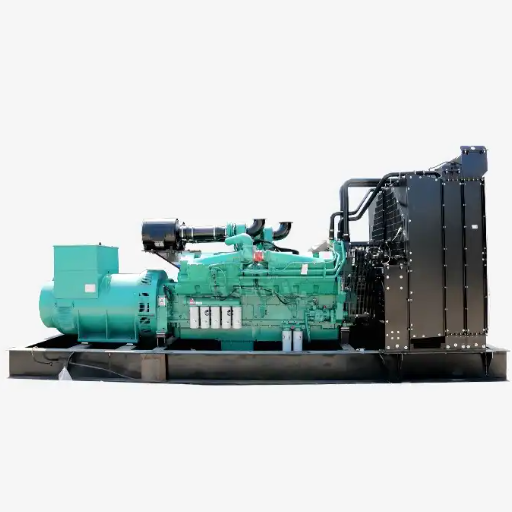
How to Prevent Vibration in Generators?
Preventing vibration in generator systems is one of the key concerns for professionals working in the power industry. Various anti-vibration systems are used to reduce vibrations generated during the operation of generators. Minimizing vibration extends the service life of the generator, reduces noise levels, and ensures more reliable equipment performance.
A certain level of vibration and noise during generator operation is normal. However, these effects can and should be minimized. Continuous vibration may cause wear of generator components, loosen mechanical connections, and weaken the structural stability of the equipment. The engine–alternator assembly and the components connecting it to the chassis are particularly affected by vibration.
What Should Be Done to Reduce Vibration?
Effective vibration reduction begins with proper planning, quality engineering, and the selection of suitable anti-vibration mounts.
One of the most important factors is the correct alignment of the engine and alternator. Accurate alignment helps reduce operational vibration, although it cannot eliminate it completely. Therefore, installing anti-vibration systems is essential.
The selection of anti-vibration components should never be random. Engineering calculations must be carried out beforehand to determine the most suitable solution.
Factors to Consider When Designing an Anti-Vibration System
When selecting an appropriate anti-vibration system for a generator, the following factors should be evaluated:
Calculating the total weight of the generator set;
Determining the center of gravity;
Selecting anti-vibration elements suitable for the intended application;
Positioning the mounts according to the center of gravity;
Calculating the percentage of load carried by each mount;
Analyzing the system's vibration frequency and selecting a solution with a low vibration transmission rate.
These calculations make vibration control significantly more effective.
Anti-Vibration Components Used in Generators
Mounts Between the Engine–Alternator Assembly and the Chassis
The primary source of vibration is the engine and alternator assembly. For this reason, special vibration-damping mounts are installed between this assembly and the chassis.
Hood-Type Anti-Vibration Mounts
In hood-type mounts, the elastomer material works under compression and shear. These mounts provide excellent vibration isolation and are ideal for applications requiring high vibration reduction.
They are widely used in:
Mobile generators;
Construction sites;
Generator systems operating under constant movement.
Because of their high vibration isolation performance, hood-type mounts are among the most commonly used solutions.
Cylindrical Anti-Vibration Mounts
Cylindrical mounts consist of a rubber block bonded to two metal parts. Their elasticity varies depending on their dimensions.
They are generally used in low-power generators. Although they are a simple and cost-effective solution, they do not provide the same level of vibration isolation as more advanced systems.
Seismic Spring Isolators
Seismic spring isolators are specially designed mechanical supports used to isolate low-frequency vibrations.
They are particularly suitable for:
Areas with high seismic activity;
Industrial equipment generating strong vibrations;
Applications involving frequent acceleration and sudden stops.
These isolators improve generator stability and ensure safe operation in critical applications.
Anti-Vibration Systems Between the Chassis and the Floor
The highest level of vibration isolation is achieved not only between the engine and chassis but also by installing anti-vibration elements between the chassis and the floor.
This solution is known as a double-mass isolation system.
Such systems offer several advantages:
Reduce vibration transmitted to the building;
Minimize noise levels;
Improve generator stability;
Help protect the equipment during long-term operation.
Accurate engineering calculations are essential to maintain generator stability when designing these systems.
Generator Leveling Mounts
In some cases, generators are installed on uneven surfaces. In such situations, leveling mounts (levelling silentblocks) are used.
Although these components do not absorb vibration, they:
Keep the generator in a level position;
Allow safe installation on uneven floors;
Improve the overall stability of the structure.
 Fill in the required fields and you will be contacted soon