


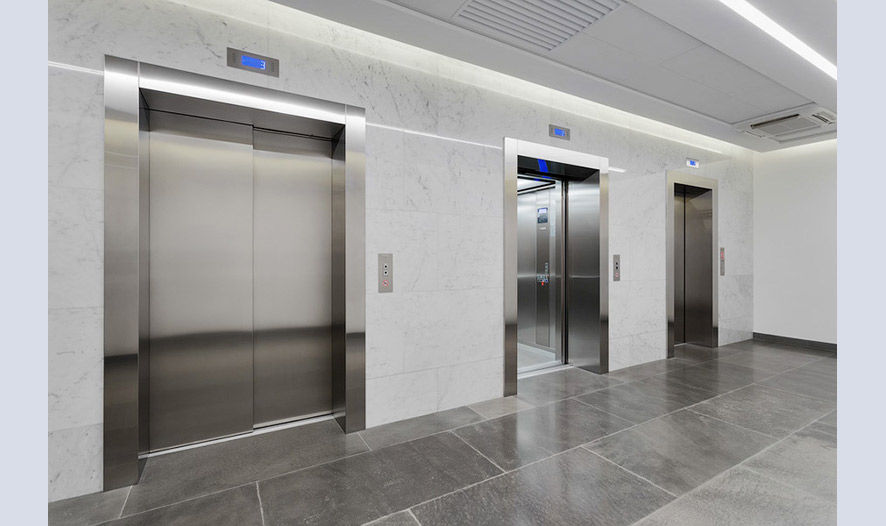
Hospital elevators are not only used for convenience, they are an essential part of hospital infrastructure.
Hospital elevators are equipment that provide movement between floors and often play a vital role in rapidly transporting patients and medical staff in situations where the difference between life and death is at stake. However, hospital elevators may face voltage fluctuations. Installing servo stabilizers for hospital elevators has become a solution to ensure continuous and safe elevator operation in hospitals. These voltage regulating devices protect elevator components from energy quality problems frequently encountered in hospitals. Numerous high-power medical devices create significant changes in electrical load.
Voltage Fluctuations in the Hospital Environment
Hospitals face challenges related to energy quality due to complex electrical infrastructure. The operation of high-power medical equipment such as MRI machines, CT scanners, surgical tools, and life-support systems creates changes in energy demand. These changes appear in the form of voltage drops, surges, and transient fluctuations. All of these can cause problems in electronic systems such as hospital elevators. These energy quality issues create serious concerns for hospitals and hospital elevators. In other buildings, elevator failures may only cause inconvenience. However, in hospitals, power interruptions in elevators can directly affect patient care and safety. Emergency patient transport, staff movement, and the timely delivery of essential medical supplies depend on reliable elevator operation. The electrical grid supplying hospitals can also be affected by factors such as weather conditions, power supply operations, and regional energy demand changes. During the use of backup generators, transitions between power sources can create voltage variations that affect hospital elevators.
Effects of Voltage Fluctuations on Hospital Elevators
Hospital elevator systems consist of advanced electronic control systems and motor drives operating within a narrow voltage range. Modern hospital elevators use AC drives and other electronic control systems that are particularly sensitive to power quality issues. When voltage deviates from normal levels, the following problems may occur:
Motor Performance Problems
The motors of hospital elevators require stable voltage to operate properly. Low voltage prevents the motor from generating the torque needed to move the elevator cabin, while high voltage can cause overheating and accelerated wear.
Control System Malfunctions
During voltage transitions, microprocessor-based elevator control systems may reset, malfunction, or completely fail.
Reduction of Magnetic Flux
Unstable voltage can reduce magnetic flux. This reduction negatively affects the efficiency of the hospital elevator and may lead to damage to the elevator.
Component Damage
Repeated exposure to voltage fluctuations increases the likelihood of component damage. This leads not only to premature failure but also to high maintenance costs.
Activation of Safety Mechanisms
Modern hospital elevators are equipped with safety systems that trigger emergency stops when abnormal operating conditions are detected. This safety mechanism may be activated during power quality issues. The consequences of these problems are not limited to technical issues. When hospital elevators stop, patient transportation may be delayed, and emergency response time may increase. In addition, during medical situations, patients may become trapped between floors in elevators.
Servo Stabilizers for Hospital Elevators
Servo stabilizers are one of the most effective solutions for protecting hospital elevators from voltage fluctuations. These voltage regulating devices continuously monitor the power supply and make instant adjustments to keep the output voltage stable regardless of input voltage changes. The core technology of servo stabilizers is based on a servo motor mechanism that adjusts the autotransformer in response to voltage changes. This mechanical adjustment occurs within milliseconds and provides a fast response to voltage variations. This rapid response is especially critical for hospital elevators, where even short-term power issues can activate safety systems.
What distinguishes servo stabilizers from other voltage regulation technologies is their precision. High-quality servo stabilizers can maintain the output voltage within a certain percentage of the required level even when the input voltage varies by ±30%. Modern servo stabilizers have the following advanced features:
• Remote monitoring capabilities.
• Built-in protection against overvoltage conditions.
• Digital displays showing input and output voltage and current.
• Bypass options for maintenance.
• Three-phase balancing for hospital elevators operating on three-phase power.
All these features make servo stabilizers a suitable choice for the diverse requirements of hospital elevators.
Benefits of Installing Servo Stabilizers for Hospital Elevators
Installing servo stabilizers for hospital elevators provides the following advantages:
Better Patient Safety
One of the most important benefits of using elevators in hospitals is improved safety during patient transportation. By preventing elevator shutdowns, servo stabilizers help ensure that patients are delivered without delay to diagnostic departments, operating rooms, or intensive care units. This allows hospitals to operate without negatively affecting outcomes. This is especially important in emergency situations where every second matters.
Reduced Damage and Maintenance Costs
Voltage stabilizers can extend the service life of elevator systems by protecting them from electrical stress. Motors, drives, control boards, and other electronic components operating at proper voltage levels experience less wear. This results in fewer failures, lower maintenance requirements, and reduced spare parts costs. After high-quality voltage stabilization systems are installed, a decrease in elevator service calls is observed. The return on investment often appears within the first year, mainly due to reduced emergency maintenance costs.
Improved Reliability and Performance of Hospital Elevators
Servo stabilizers not only prevent failures but also improve the daily operation of elevators. When systems receive stable power, noticeable changes occur. Elevator cabins move more smoothly, doors operate more consistently, and stopping accuracy improves. All of this leads to more efficient hospital operations and a better experience for patients, visitors, and staff.
Energy Efficiency and Cost Savings
Proper voltage regulation also increases energy efficiency. When elevator motors receive the required voltage, they consume less current. Proper voltage regulation helps systems operate more efficiently. Over time, this reduced energy consumption leads to lower utility costs for the facility. Since hospital elevators account for a significant portion of a hospital’s energy consumption, these savings can be substantial.
 Fill in the required fields and you will be contacted soon