


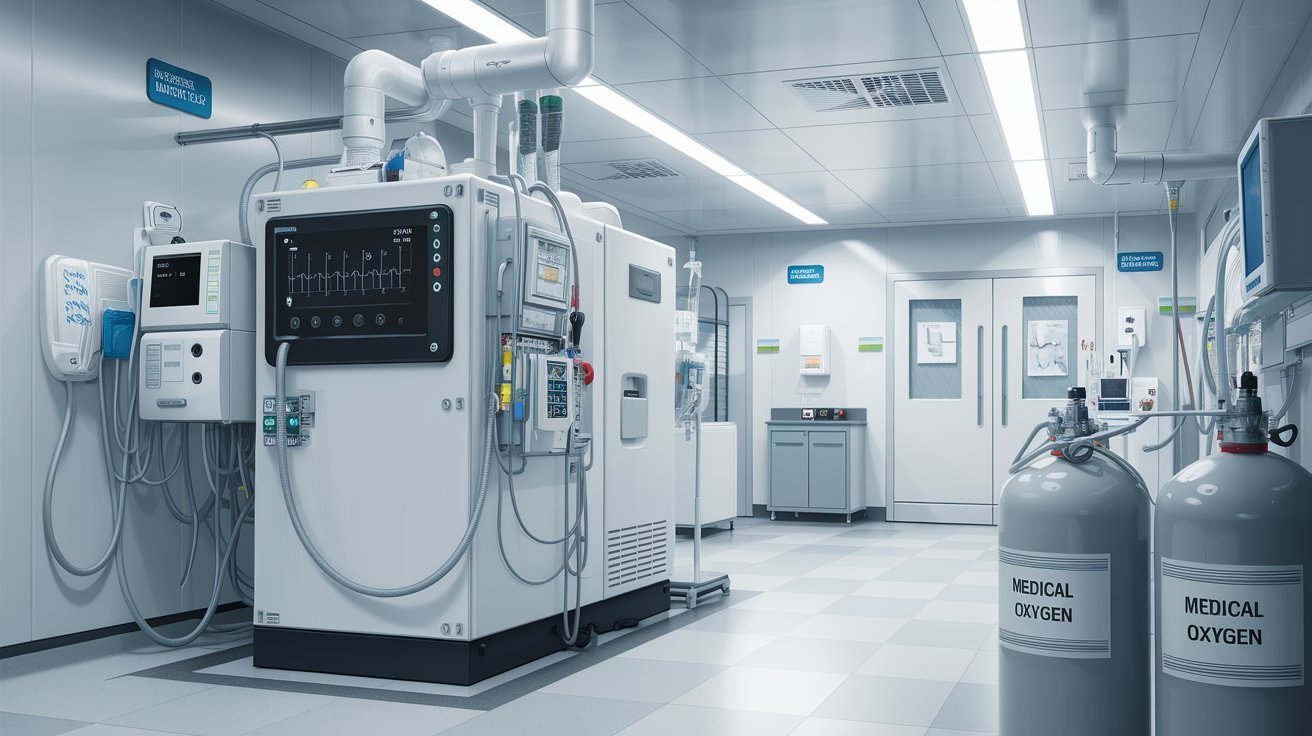
Key requirements for generators in healthcare facilities such as hospitals and clinics are extremely important.
These facilities operate under strict safety standards, which is why generator requirements are higher than in most other industries. The generator must provide an uninterrupted power supply. The generator should start automatically through an Automatic Transfer Switch (ATS). This prevents medical equipment in hospitals and clinics from stopping even for a few seconds. Generators in healthcare facilities must also provide high power quality. Medical devices used in hospitals and clinics are extremely sensitive to voltage fluctuations. Generators in healthcare facilities must supply stable current without frequency or voltage drops. Hospitals and clinics often use models equipped with inverter technology or high-quality voltage stabilizers.
Safety and Reliability Requirements
Generators in healthcare facilities must also comply with safety and environmental standards. Hospitals and clinics require low noise levels and minimal air pollution. Therefore, generators in healthcare facilities are installed in special enclosures or insulated, ventilated rooms. Generators in healthcare facilities must be reliable and capable of long-term operation. During power outages, generators in hospitals and clinics must be able to run for hours or even days. Industrial diesel generators used in healthcare facilities are known for their durability and ability to handle high loads.
Maintenance and Monitoring
Regular maintenance of generators in healthcare facilities is also essential. Continuous inspections, test runs, and fuel monitoring are mandatory in healthcare facilities. Maintenance logs are kept in hospitals and clinics, and personnel receive training to operate the equipment safely.
Choosing Between Diesel and Gas Generators
When selecting a generator for healthcare facilities, the choice is usually between diesel and gas generators. Both industrial diesel generators and gas generators are widely used in the healthcare sector, but each has its own advantages. Diesel generators are the most commonly used option in healthcare facilities. They are powerful, reliable, and can start quickly in hospitals and clinics under all weather conditions. Diesel fuel is easy to store on-site at hospitals and clinics, and maintenance is relatively simple. The main disadvantages of diesel generators are noise and emissions, although these issues have been significantly reduced in modern models.
Gas generators in healthcare facilities are quieter and more environmentally friendly. They are ideal for hospitals and clinics located in areas with access to a stable gas supply. Gas-powered systems in healthcare facilities are cost-effective, require less maintenance, and can operate almost continuously. Their main disadvantage is their dependence on a gas supply line in hospitals and clinics.
Factors to Consider When Choosing a Generator
When selecting a generator for a medical facility such as a hospital or clinic, consider the following factors:
• the total power demand of all critical systems in hospitals and clinics
• the required independent operating time in hospitals and clinics
• acceptable noise and vibration levels in hospitals and clinics
• fuel availability in hospitals and clinics
• safety and ventilation requirements in hospitals and clinics
Backup Power Systems and Installation
Large hospitals and clinics often install a two-level backup power system. This includes one primary high-capacity diesel or gas generator and an additional backup generator. This ensures that power supply continues in hospitals and clinics even if one of the generators fails.
It is extremely important to entrust the installation and commissioning of generators in hospitals and clinics to professionals. Incorrect electrical connections or improper installation can lead to exhaust gas leaks and even fire hazards. Regular maintenance, filter replacement, and monitoring of oil and fuel levels ensure the reliable operation of generators in healthcare facilities. Many modern hospitals and clinics use automated monitoring systems that remotely track generator performance and send alerts about potential issues.
Choosing the right generator for medical facilities is vital for patient safety and uninterrupted operations. A properly selected and professionally installed diesel or gas generator ensures that operating rooms, intensive care units, laboratories, and other critical systems continue functioning during power outages. For a reliable power solution, you can contact Absheron.makina LLC to obtain high-quality generator products and benefit from professional installation services.
 Fill in the required fields and you will be contacted soon