


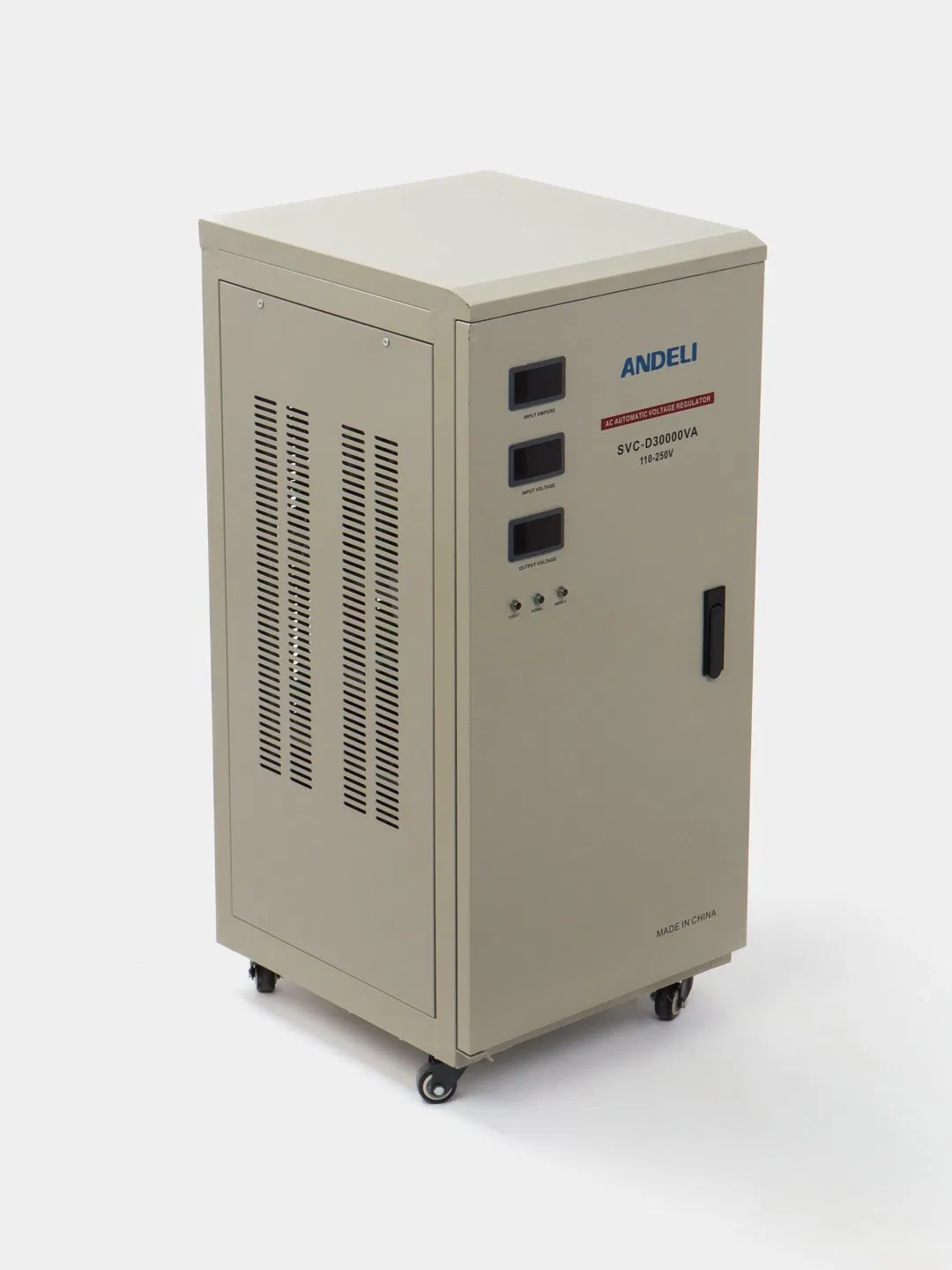
Even imagining an ordinary day without using electrical devices is impossible.
They are not only important in commercial spaces and industrial enterprises but also an essential part of our daily lives.
However, voltage fluctuations and power surges can cause disruptions in the normal operation of electrical devices.
They not only create inconvenience but can also reduce the efficiency of equipment.
These fluctuations can also lead to regular malfunctions and even permanent damage.
However, such situations can be prevented with the installation of a stabilizer. How?
What does a stabilizer do? This blog will help you understand the operation, types, and unique functions of stabilizers.
What does a stabilizer do?
Voltage stabilizers play an important role in maintaining a stable voltage supply.
An efficient voltage stabilizer ensures not only the longevity but also the proper operation of electrical equipment.
The voltage stabilizer is responsible for regulating and maintaining a stable output voltage.
This helps protect electronic devices from voltage fluctuations.
These fluctuations occur due to changes in the voltage coming from the electrical grid.
This input voltage can be either too high (overvoltage) or too low (undervoltage).
The stabilizer ensures that the output voltage remains within an acceptable range.
This protects electronic equipment from any damage caused by power fluctuations.
The voltage stabilizer performs the function of automatically regulating and maintaining a stable output voltage by carrying out buck (during high input voltage) and boost (during low input voltage) operations at the input source, ensuring that the output voltage remains within a predefined range regardless of fluctuations at the input.
This process is essential for excellent voltage regulation protection and improved efficiency of electronic equipment.
Types of stabilizers and their unique functions
There are different types of voltage stabilizers designed for various electrical usage scenarios. The main types are as follows:
Servo Stabilizers (Servo-Controlled Stabilizers)
Servo-controlled voltage stabilizers, also known as servo stabilizers, are advanced stabilizers that provide excellent voltage regulation using a servo motor-driven mechanism.
These stabilizers consist of a control circuit, a buck/boost transformer, and a servo motor that continuously monitors and adjusts the output voltage.
They are mainly used for high output voltage accuracy.
Servo stabilizers maintain ±1% accuracy even when the input voltage varies up to ±50%.
The unique functions of servo stabilizers are as follows:
• Ideal for high-end electronic equipment and industrial electrical devices.
• Provides very precise output voltage within a narrow range.
• Offers protection against overload and voltage fluctuations.
• Works well for three-phase voltage stabilizer applications.
Static Stabilizers
Unlike servo stabilizers, static voltage stabilizers use solid-state electronic components instead of a servo motor.
They do not have moving parts like a servo motor.
They operate based on microprocessor-controlled circuits to regulate voltage fluctuations.
These stabilizers consist of an IGBT power converter, a buck-boost transformer, a microcontroller, and a microprocessor.
The microprocessor-controlled IGBT converter generates precise voltage through pulse width modulation.
This voltage is then supplied to the primary of the buck-boost transformer.
Compared to servo stabilizers, static stabilizers can provide excellent voltage regulation.
The unique functions of static stabilizers are as follows:
• Fast response time, ensuring stable power supply.
• Ideal for electronic devices requiring precise voltage levels.
• No moving parts, leading to lower maintenance costs.
• Better protection against voltage surges.
Relay Type Voltage Stabilizers
These are the most commonly used stabilizers for household electrical equipment.
They operate on the principle of switching relays on and off to regulate incoming voltage and maintain stable output voltage.
These voltage stabilizers adjust input voltage variations from ±15% to ±6% and provide ±5–±10% output voltage accuracy.
They are mainly used for low-power equipment in residential, commercial, and industrial sectors.
However, they have several limitations, including low speed during voltage correction, lower durability, lower reliability, short interruptions during regulation, and inability to withstand high voltage spikes.
The main features of relay-type stabilizers are as follows:
• Cost-effective solution for devices such as TVs, refrigerators, and computers.
• Lightweight construction.
• Ability to operate within a specific voltage range.
• Moderate output voltage accuracy.
• Basic level of protection against high voltage.
Digital Voltage Stabilizers
Digital stabilizers use microcontrollers and digital circuits to efficiently regulate initial voltage fluctuations.
They provide improved accuracy in maintaining stable voltage.
The unique functions of digital voltage stabilizers are as follows:
• Used for modern electronic equipment such as air conditioning units and inverter AC stabilizers.
• Offer additional features such as power rating display, energy consumption monitoring, and automatic shutdown.
• Ensure stable power flow with high efficiency.
Choosing the Right Voltage Stabilizer
The selection of the right stabilizer depends on several factors, including device power ratings, input supply voltage range, and electrical usage.
These include required wattage, voltage fluctuation levels at the installation site, device type, stabilizer type, operating range, over/under voltage cut-off settings, control circuit type, mounting type, and other relevant factors.
To choose the right stabilizer, consider the following.
• Determine your device power ratings.
• Define the input voltage range.
• Consider the type of devices.
• Pay attention to additional features such as surge protection, overload protection, and energy-efficient design.
Benefits of Using a Voltage Stabilizer
Using a stabilizer for your electronic devices and electrical equipment offers many advantages, including:
• Long lifespan: Reduces wear and tear on electronic components.
• Cost savings: Prevents frequent breakdowns and reduces replacement costs.
• Better performance: Ensures stable power supply for uninterrupted operation.
• Protection from voltage fluctuations: Protects devices from unexpected voltage surges.
Common Applications of Voltage Stabilizers
Voltage stabilizers are widely used in residential, commercial, industrial, healthcare, and telecommunications applications.
They are used in electronic computers, precision machinery, CT scanners, precision instruments, testing equipment, elevator lighting, and imported equipment.
They are useful in production lines and other environments where stable voltage supply is essential.
This device is especially suitable for users at the end of low-voltage distribution networks where supply voltage is too low or too high and significant fluctuations occur.
It is ideal for electrical equipment experiencing large load variations and is particularly effective in locations requiring high-quality voltage stabilization.
In addition, high-power compensation-type stabilizers can be connected to thermal energy, hydraulic energy, and small generators.
 Fill in the required fields and you will be contacted soon