


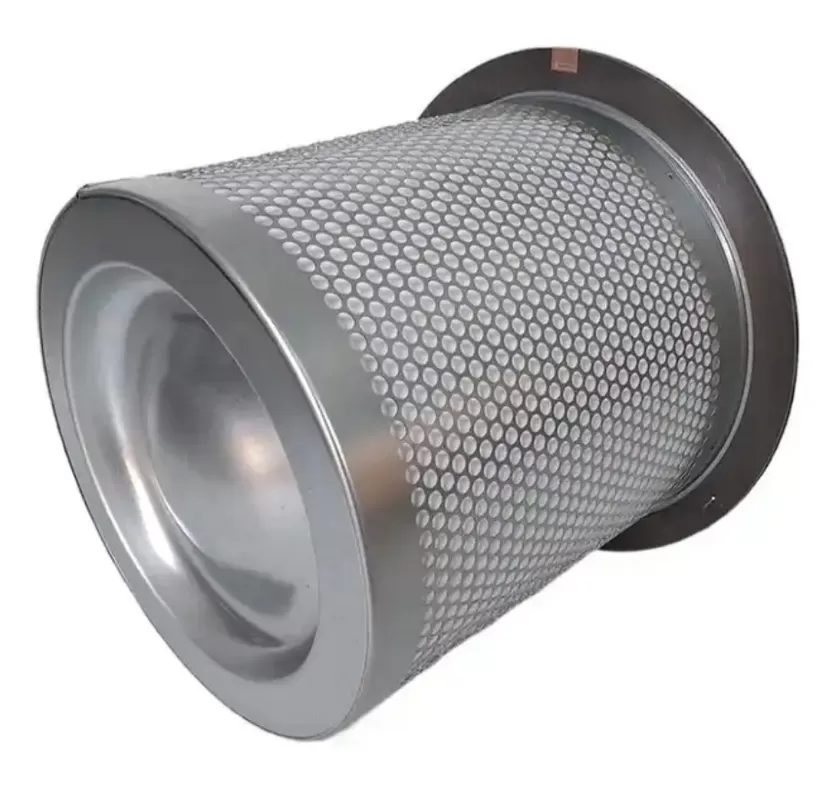
Generator oil filters are the first line of defense against contaminants that can compromise the integrity of your generator’s engine.
Generator engines operate using oil that circulates throughout the system and lubricates the internal mechanisms to keep everything running smoothly and with minimal friction. The generator oil filter is an essential component of this lubrication system.
Most generator oil filters are similar to those used in automobiles. They consist of a cylindrical housing that contains the actual filter. The filters can be made from various materials such as cellulose or synthetic fibers. These materials are woven together to create a porous structure designed to allow oil to pass through while trapping unwanted particles, much like a kitchen strainer.
Why Do You Need Generator Oil Filters?
Like many other components of a generator, the oil filter plays a vital role in ensuring the generator operates without major issues. Without a proper generator oil filter, the oil circulating through the engine will become thick and contaminated, threatening the functionality of your generator.
During normal generator operation, various contaminants enter the oil and engine system. These contaminants can be as small and simple as dust particles or as large as metal fragments coming from other engine parts. In any case, the presence of contaminants in your oil is a perfect way to disrupt the operation of your generator.
Why Generator Oil Filters Should Be Replaced Regularly
Even the highest quality oil filters wear out over time and become saturated with dirt and debris. A dirty generator oil filter not only reduces filtration efficiency but also affects the overall performance of the machine.
If the generator oil filter is clogged, the generator must work harder to push oil through the filter. In addition, it becomes more difficult for the oil to circulate throughout the engine system because it often becomes thicker and contaminated, which can lead to the following:
- Unnecessary wear and tear
- Excessive heat generation
- Higher energy consumption
Features and Functions of Diesel Generator Oil Filters
Several filters with different filtration capacities are installed in the lubrication system of a diesel generator — a coarse filter and a fine filter, connected in parallel and series with the main oil passage respectively, allowing the filtration system to be divided into full-flow filtration. The full-flow filter, also known as the primary filter, is connected in series with the main oil passage so that all engine oil passes through it.
It can filter contaminants with large particle sizes (above 0.1 mm in diameter), and the filter element is made of paper. To prevent oil flow interruption caused by blockage of the coarse filter, a bypass valve is installed in the filter head. Once the coarse filter becomes clogged, the bypass valve can open, allowing unfiltered oil to enter the main oil passage and lubricate all engine components.
The airflow filter is a fine filter. The fine filter can directly filter fine contaminants larger than 0.001 mm. It is connected in parallel with the main oil channel, and its filter element is also made of paper. After the oil is filtered by the fine filter, it returns to the oil sump. Since part of the oil is continuously filtered through the fine filter during engine operation, the overall filtration effect improves and the service life of the oil is extended.
How Often Should I Replace My Generator Oil Filter?
Most oil filters are recommended to be replaced approximately every two hundred hours, but it is always a good idea to consult the manual for your specific model. If you operate in especially dusty or other harsh conditions, you may need to replace the filter more frequently depending on the brand and type of filter you use.
 Fill in the required fields and you will be contacted soon